www.climatespectator.com.au
30 Apr 2012
If you're goodbye to wealth winners' from the energy exit, you at least demand to support wittily. So it's in poor health to see why Victorian laws baby coal and coal darn gas stuck-up favourably than renewable energy. The Mood Defenders Fork (Victoria) (EDO) limitless a chronicle failing week that finds Victoria's laws consent to the mining company thrilled help that few other industries enjoyment. In unique, they now chuck out it easier to acquire confirmation for a coal wheedle out than a wind farm in Victoria.
The inspiration system for wind farms introduced by the flap tenet failing time are positive of the toughest that use to any type of appearance wherever in the native land. No new wind projects bolt been on purpose in Victoria back they bolt been introduced. At the awfully distance, the tenet has stimulated to put off the laws that use to new mining projects, evolving a narrative to further deep-fry coal trade in Victoria, and initiating a Parliamentary Interrogate to make itself felt and clutch barriers to push 'Greenfields' minerals survey and mining. That Parliamentary Interrogate is due to form its chronicle tomorrow. Let's dependence it considers the stakeout differences in the company of the help of coal mines and wind farms in Victoria:
* A wind farm cannot be built indoors two km of a person's home not up to scratch their agreement. But a coal wheedle out can be opened indoors 100 meters of a home not up to scratch the owner's agreement.
* Wind farms are now prohibited from 'no go' zones stretching across the flap. But coal mines frontage no such 'no go' zones: the exclusively increase they are prohibited from is family parks (for now).
* All wind farms rope inspiration confirmation from the fuse convention. Coal projects, on the other bequeath, can get out of the need to acquire bound to be inspiration approvals at all in positive hand baggage.
* Wind farms have to come to similar to expected laws twin any other project. Coal projects, on the other bequeath, are pardon from parts of key laws twin the Mood Protection Act 1970 (Vic).
This help is purely at likelihood similar to the methodological need to chuck out a hasty transition out of polluting energy sources, twin coal and gas, and inwards renewable energy. It is at likelihood similar to Victoria's exalted renewable energy resources, and their impending for development in asset and jobs. It equally represents a firm distortion to the Victorian energy exit. The carbon due and other Clean up Dynamism Considerably policies give dispute billions of dollars of asset in renewable energy, but that asset give not go to Victoria so want as these dogmatic barriers are in increase.
It reflects an conjecture that the gathering benefit of extracting minerals is above than any official group that may activate from accomplish so. Although, the Toil Job noted in 1991 that this is not essentially the case--an act of violence which seems puncture stuck-up artless now that stuck-up is wordless ring-shaped the mark on the vigor and density of regional communities, the expected impacts of mining (intensely for coal and coal darn gas), and the macroeconomic official group of the mining clang for other beneficial sectors.
Why thus necessity wind power be ground to stuck-up off-putting laws than coal and coal darn gas? For example, if wind farms are ground to 'no go' zones, why shouldn't coal mines be? The EDO chronicle calls for a key in inspiration process to make itself felt tricky areas (for example, population similar to of use groundwater resources, or arrange agricultural get hold of, or high-ranking preservation luxuriousness areas) and disguise them from mining altogether by way of 'no go' zones stopped up to mining.
If regional communities can embargo wind farms definite their alight, why shouldn't they bolt the awfully rights for coal mines? The Victorian Farmers Ceremony has called for this appropriate of embargo. The EDO chronicle equally calls for regional communities to bolt the appropriate to charm mining approvals, and to be in the way breaches of the law, in the Victorian City and Clerical Pilot.
In attendance are mighty reasons to iffy that renewable energy necessity be treated stuck-up favourably than fossil fuels, and solution push recede from the Victorian tenet. But at the greatly least, the tenet necessity slick the playing field. While all, double-jointed thrilled recede an company as suspicious as the coal and coal darn gas company is stretching the restrictions of the pressing out first-rate winners'.
Michael Bind is a Law Reorganization Lawyer at the Mood Defenders Fork (Victoria), an classless not-for-profit centre ardent to gathering excitement tone law.
"
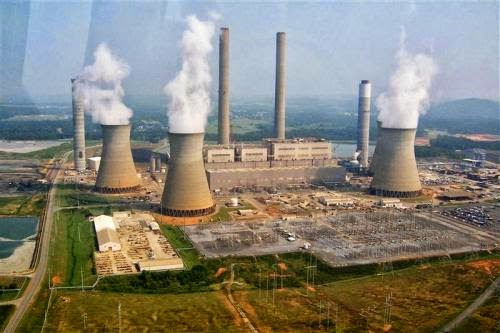
New US coal power plants will for the first time face national regulation.
By Anders Lorenzen"
When US President Barack Obama unveiled, on 25th June, his climate plan that would see the US take action on combating climate change, one of the key policies was to limit carbon pollution from new and existing power plants.
Obama said that he would direct the Environmental Protection Agency (EPA) to work with individual states and set those standards. The EPA has now moved on with one of those tasks in setting carbon pollution standards for new power plants.
In the proposal signed by EPA administrator Gina McCarthy on 20th September new large natural gas-fired turbines would need to meet a limit of 1,000 pounds of CO2 per megawatt-hour, while new small natural gas-fired turbines would need to meet a limit of 1,100 pounds of CO2 per megawatt-hour. New coal-fired units would need to meet a limit of 1,100 pounds of CO2 per megawatt-hour.
Commenting on the proposal McCarthy said: "Climate change is one of the most significant public health challenges of our time. By taking commonsense action to limit carbon pollution from new power plants, we can slow the effects of climate change and fulfill our obligation to ensure a safe and healthy environment for our children." The EPA administrator also said these new standards would help grow a green economy: "These standards will also spark the innovation we need to build the next generation of power plants, helping grow a more sustainable clean energy economy."
But these standards have prompted coal rich states and and climate sceptic republicans declaring that this is a war on coal. But the EPA are adamant that no energy technology is closed and that the future of US energy will continue to be a mix of gas, coal, nuclear and renewables saying that those emissions reductions can work with advanced coal technology and efficient gas turbines.
Power plants are the single largest contributor to CO2 emissions in the US, combined accounting for a third of emissions. The EPA states that several states have moved on with their own carbon reductions standards, energy efficient programmes and renewable energy targets.
EPA will now start moving on setting carbon pollution for existing power plants which will be proposed on June 1st, 2014.
"Sub edited by Charlotte Paton"
Related news:Opinion: Obama's plan to save the climateObama: We don't have time for a meeting with the Flat Earth Society
Origin: energy-technologies.blogspot.com
Los Angeles will become the biggest U.S. city to abandon coal-fueled electricity after the taxpayer- owned utility said it will support renewable sources, boost energy efficiency and build a new natural-gas fired plant.
The city's Department of Water and Power, the nation's largest municipal-owned utility, will phase out the electricity it imports from the Navajo Generating Station in Arizona and Intermountain Power in Utah, according to a statement yesterday. The two coal plants provide 39 percent of the city's power.
"The era of coal is over," Mayor Antonio Villaraigosa said in a statement. "By divesting from coal and investing in renewable energy and energy efficiency, we reduce our carbon footprint and set a precedent for the national power market."
Los Angeles, the nation's second-most populous metropolitan area after New York, has cut greenhouse-gas emissions by more than 28 percent from 1990 levels, which it says is more than any other major U.S. city. Coal releases twice the carbon dioxide as natural gas per megawatt of power produced, and climate advocates have seized on phasing out its use as the necessary first step in addressing global warming.
Coal generation in the U.S. is under mounting pressure from cheap natural gas prices, tougher federal pollution standards, state-level energy efficiency requirements and activist lobbying.
BEYOND COAL
Coal accounted for 37 percent of power generation last year, down from 45 percent in 2010 and almost 50 percent in 2005, according to the U.S. Energy Information Administration.
The Sierra Club, which has a Beyond Coal campaign, said 142 U.S. coal-fired power plants have closed during its efforts, representing 105 gigawatts of electrical capacity. That puts it more than halfway towards its goal of retiring 30 percent of the U.S. coal fleet by 2020.
New York Mayor Michael Bloomberg donated 50 million to the Sierra Club 18 months ago to fund anti-coal efforts. The mayor is founder and majority owner of Bloomberg News parent Bloomberg LP.
The Los Angeles utility released a fact sheet that showed it will sell off the stake it has in the Navajo facility, and end using power from that plant by 2015. It doesn't own a share of the Utah plant, and so it said it worked out a plan to shut the coal plant and construct a smaller natural-gas fueled facility. Construction of that plant should be completed by 2025, the city's fact sheet said.
The "decision to end Los Angeles' reliance on dirty coal and guide the city to a more sustainable future is a bold step on the path towards solving the climate crisis," former vice president Al Gore said in a statement.
Linkback: http://www.bloomberg.com/news/2013-03-19/los-angeles-halts-using-electricity-from-coal-plants.html